
ARCHITECTURE
Sustainable Resort Design
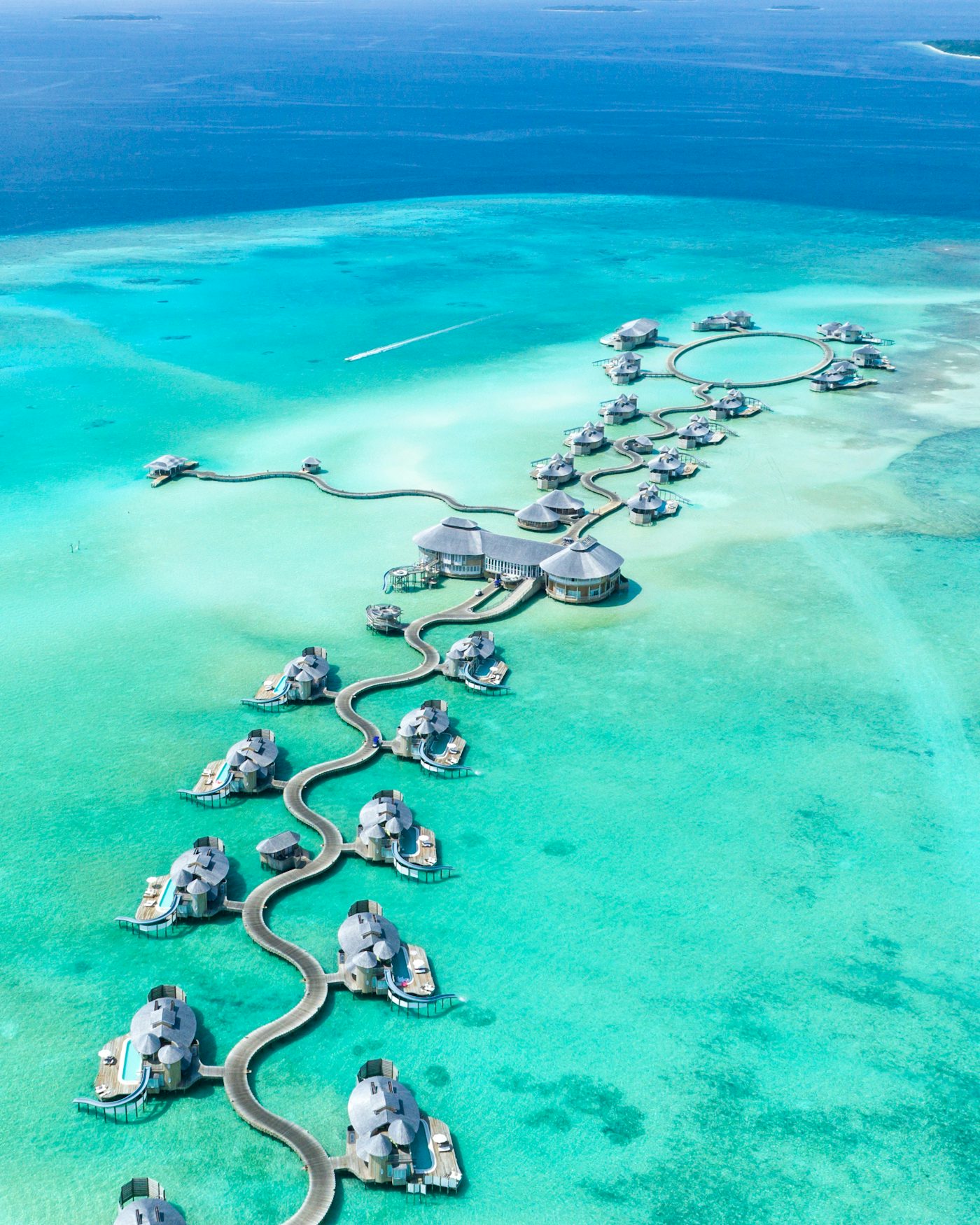
Solar roofs that become architecture. Floating villas that avoid reef damage. Waste systems that guests want to visit. How sustainability and luxury intersect in the Maldives.
Sustainable Design Projects
Kudadoo Maldives
Yuji Yamazaki
The solar array IS the roof. 984 photovoltaic panels cover every building on the island. They generate 100% of the resort's daytime electricity. The panels also provide shade for the structures below. The architectural decision to make energy production visible rather than hidden is what makes Kudadoo unique. Guests see the solar roof from their villa and understand how the resort is powered.
Environmental Impact
100% daytime solar electricity. Estimated 600+ tonnes CO2 avoided per year.
Guest Experience
The solar canopy creates a distinctive silhouette. It is the first thing you see arriving by seaplane. All-inclusive luxury; the sustainability is built into the architecture, not bolted on.
Hurawalhi Island
Yuji Yamazaki
One of the largest solar installations in the Maldives. 4,243 square meters of solar panels integrated into the resort's roof structures. The panels cover walkways, creating shaded paths across the island. Like Kudadoo, the solar infrastructure doubles as architectural shade.
Environmental Impact
Significant reduction in diesel generator dependency. Powers the underwater restaurant, water desalination, and cooling systems.
Guest Experience
Adults-only resort. The 5.8 Undersea Restaurant sits 5.8 meters below the surface. Solar power helps offset the energy-intensive systems that keep the underwater restaurant operational.
Infinite Maldives (Shigeru Ban)
Shigeru Ban
Pritzker Prize winner Shigeru Ban applies his signature approach: lightweight, prefabricated structures that minimize material use and environmental impact. Components are manufactured off-site and assembled with minimal heavy machinery. The resort-residence concept introduces a new property type to the Maldives.
Environmental Impact
Reduced construction waste. Smaller foundation footprint. Less disruption to the marine environment during building.
Guest Experience
Exposed structural elements are the design. The architecture looks effortless, but the engineering behind prefab construction in a marine environment is demanding.
BACA Architects
BACA Architects
BACA specializes in amphibious and floating architecture designed to rise with sea level. Their Maldives concepts use floating platforms rather than fixed stilts. As sea levels change, the structures adapt. No dredging, no reef damage from foundation work. The villas float on the lagoon surface.
Environmental Impact
Climate-adaptive design. No reef or seabed damage. Relocatable structures that can be moved if needed.
Guest Experience
Gentle movement on the water. A different sensation from stilted villas. The floating design creates a more intimate connection with the ocean surface.
Swimsol
Swimsol (engineering firm)
Swimsol developed floating solar panel arrays specifically for the Maldives. The panels sit on platforms in resort lagoons. They generate electricity without using valuable land space. The platforms are anchored to the seabed and designed to withstand open-ocean wave action.
Environmental Impact
Each floating array generates 50-150 kW. Multiple resorts now use Swimsol systems. Reduces diesel consumption by 30-40% at installations.
Guest Experience
The floating panels are visible in the lagoon. Some resorts position them away from guest areas. Others integrate them into the resort's visible sustainability narrative.
Soneva Fushi
Soneva in-house design
Eco Centro is Soneva's waste management and recycling center. It processes all resort waste on-island. Glass is crushed and reused. Food waste becomes compost for the organic garden. Metal and plastic are sorted for recycling. The center itself is an architectural feature: guests can visit and see the full waste cycle.
Environmental Impact
Zero waste to landfill. Glass recycled into building materials. Compost feeds the resort's herb and vegetable garden. A model for island-scale waste management.
Guest Experience
Guests are invited to visit Eco Centro. The transparency is the point: showing that luxury and zero-waste can coexist. Children's programs include recycling workshops.
Want to stay at a sustainable resort?
We can recommend resorts where sustainability is part of the design, not just a marketing claim. Tell us your priorities and budget.
Where Sustainability Meets Luxury
The best sustainable resorts do not compromise on luxury. They use environmental constraints as design opportunities.
Energy production as design
Kudadoo's solar roof is the building's primary architectural feature. The panels are not hidden on a service building. They ARE the roof. Sustainability becomes the aesthetic.
When energy systems are visible, they become part of the luxury narrative rather than a compromise.
Lightweight construction
Shigeru Ban's prefab approach reduces material volume by 30-40% compared to traditional concrete construction. Less material shipped to remote islands means lower carbon footprint.
Lighter structures can be more elegant. The constraint of sustainability often produces better design.
Floating over fixed
BACA's floating villas avoid reef damage entirely. Traditional stilted villas require drilling into the reef or seabed. Floating platforms sit on the surface without touching the bottom.
The most sustainable approach may also create a better guest experience: gentle movement, closer to the water.
Waste as feature
Soneva's Eco Centro is a destination within the resort. Guests visit, children participate. The waste system is an experience, not a hidden operation.
Transparency about environmental operations can enhance rather than detract from luxury positioning.
Why This Matters for the Maldives
Average Elevation
1.5 meters above sea level. The Maldives is the lowest-lying country on Earth. Every centimeter of sea level rise matters.
Energy Challenge
Most resorts run on diesel generators shipped by boat. Solar reduces fuel dependency and removes the noise and smell of generators from guest areas.
Waste Problem
Thilafushi (the waste island near Male) is one of the most polluted places in the Indian Ocean. On-island waste processing like Soneva's Eco Centro is the alternative.
Coral Restoration as Design
Several resorts now integrate coral nurseries and reef restoration into their guest experience. These programs are both ecological projects and architectural features.
Reefscapers (Multiple Resorts)
Coral frame nurseries
Metal frames seeded with coral fragments, placed on the house reef. Guests can sponsor a frame ($50-$250), plant coral fragments, and track growth online. Frames are visible while snorkeling. Over 5,000 frames deployed across Maldives resorts.
Soneva Namoona
Community waste-to-reef program
Soneva's community program extends beyond the resort. Works with nearby local islands on waste management. Clean reefs support healthier coral growth. The program connects resort sustainability with regional impact.
Banyan Tree Marine Lab
Vabbinfaru, North Male Atoll
One of the oldest marine conservation programs in the Maldives. In-house marine biologist. Turtle monitoring, coral surveys, and guest education. The lab itself is an architectural feature of the resort, open to all guests.
Six Senses Laamu
Manta and turtle monitoring
Resident marine biologist team. Blue Manta ID project tracks individual mantas. Guests join monitoring dives and snorkeling surveys. The research facility is integrated into the resort's public spaces.
Sustainability by the Numbers
Concrete data on what these projects actually achieve. Numbers matter more than marketing claims.
984
Solar panels at Kudadoo
4,243m²
Solar area at Hurawalhi
600+
Tonnes CO2 saved/year (Kudadoo)
30-40%
Diesel reduction (Swimsol)
5,000+
Coral frames deployed (Reefscapers)
0
Waste to landfill (Soneva)
1.5m
Average elevation above sea level
30-40%
Material reduction (prefab)
How to Choose a Sustainable Resort
Look For
- Visible solar installations (not just a claim on the website)
- On-island waste processing or clear waste management policy
- Resident marine biologist (not just occasional visits)
- Coral restoration program with measurable results
- Water desalination (reduces bottled water imports)
- Organic garden supplying the resort restaurants
Be Skeptical Of
- "Carbon neutral" claims without third-party verification
- Sustainability pages with no specific data or numbers
- Resorts that only mention sustainability during booking
- "Eco" branding on otherwise standard operations
- One-time initiatives presented as ongoing programs
- Offsetting without reducing actual emissions
Related Pages
Architects of the Maldives
Yamazaki, Shigeru Ban, and the designers driving sustainable innovation.
Read moreOverwater Villa Design
How villa construction methods are evolving toward sustainability.
Read moreThe Muraka Underwater Suite
Engineering at the extreme: living below the ocean surface.
Read moreReady to Visit a Sustainable Resort?
Prefer to talk to someone directly? Call us at +960 771 9666 or chat on WhatsApp