
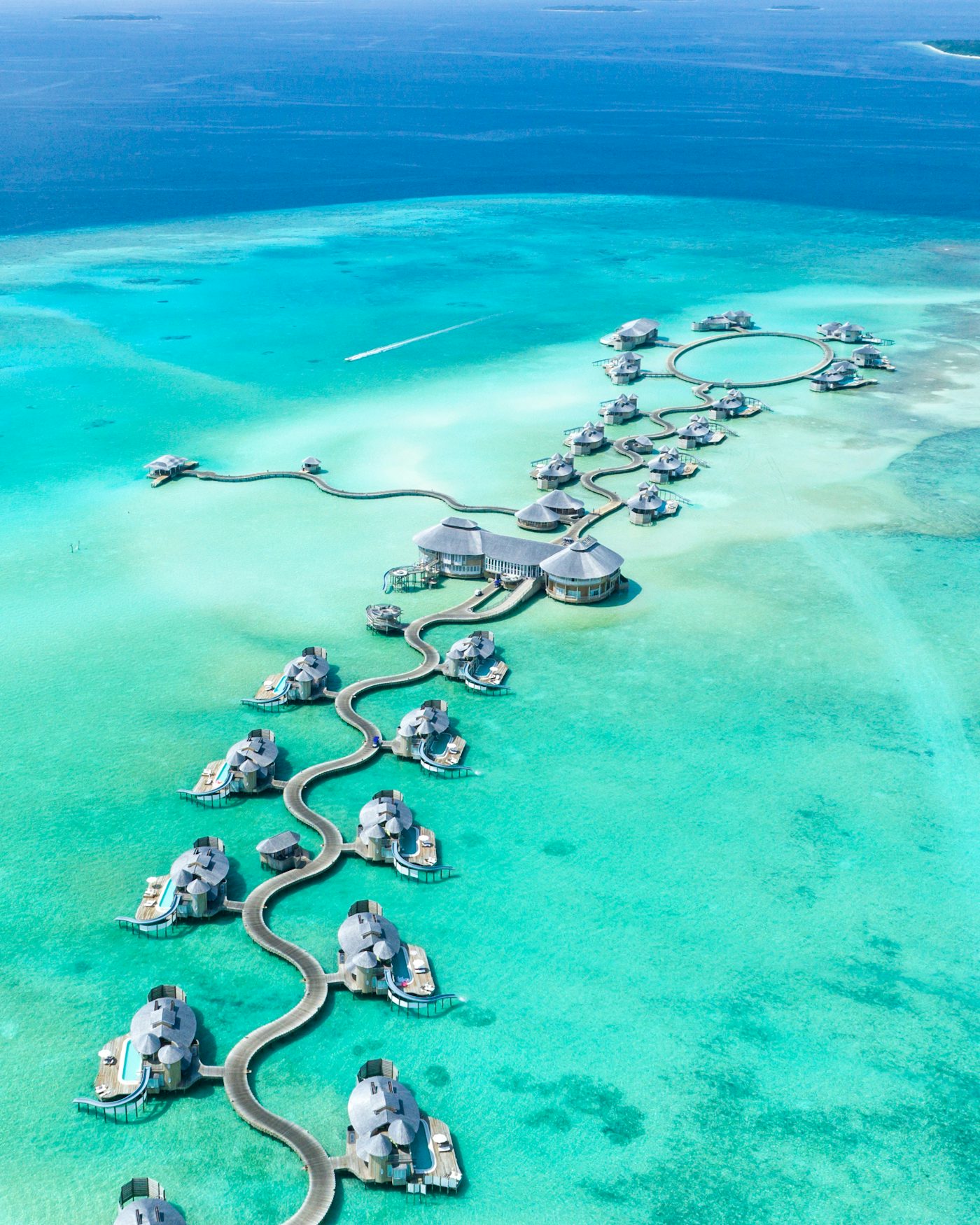
PHOTOGRAPHY
Astrophotography in the Maldives
Near the equator, both celestial hemispheres are visible. Remote atolls reach Bortle 1-2 darkness. The Milky Way core is visible February through October.
Why the Maldives for Astrophotography
Equatorial Position
- Located at 0 to 7 degrees north latitude
- Both northern and southern skies visible
- Southern Cross and Orion in the same night
- Milky Way passes nearly overhead
- Unique for combining both hemispheres
Minimal Light Pollution
- Resort islands are isolated by ocean
- No cities beyond Male (population 250,000)
- Remote atolls: Bortle 1-2 class skies
- No industrial light sources on most islands
- 360-degree unobstructed horizon over ocean
Challenges
- Humidity: 75-85%. Lens fogging is constant.
- Salt spray corrodes exposed equipment
- Monsoon season: cloud cover June-September
- Resort lighting can interfere (varies)
- No power outlets on beaches (bring batteries)
Dark Sky Ratings by Resort
Bortle scale: 1 is pristine dark sky, 9 is inner-city. Anything below 3 is excellent for astrophotography.
| Resort | Bortle Class | Observatory | Astronomer | Best Shooting Spot |
|---|---|---|---|---|
| Soneva Fushi Baa Atoll | 2 (Excellent) | Yes | No | Observatory deck, beach north of villa 63 |
| Anantara Kihavah Baa Atoll | 2 (Excellent) | Yes | Yes | SKY bar deck, water villa sundeck |
| Cocoa Island by COMO South Male Atoll | 3 (Good) | No | No | Villa sundeck facing south |
| Six Senses Laamu Laamu Atoll | 1-2 (Excellent) | No | No | Beach east side, overwater bar deck after closing |
| Baros Maldives North Male Atoll | 3-4 (Moderate) | No | No | Lighthouse restaurant deck |
| Kurumba Maldives North Male Atoll | 4 (Fair) | No | No | West beach away from pool lights |
Resort Details for Astrophotographers
Soneva Fushi
Baa Atoll
On-site observatory with a powerful telescope. Remote location in Baa Atoll with minimal light pollution. The resort dims lights after 10pm in common areas. One of the best dark-sky locations in the Maldives.
Best Shooting Location
Observatory deck, beach north of villa 63
Anantara Kihavah
Baa Atoll
SKY bar is the only overwater observatory in the Maldives. Resident astronomer on staff runs nightly sessions. Zeiss telescope. The astronomer can help you set up your camera for Milky Way shots.
Best Shooting Location
SKY bar deck, water villa sundeck
Cocoa Island by COMO
South Male Atoll
Small, intimate resort with only 33 rooms. Limited artificial light. Overwater villas face open ocean to the east and south. Good for rising constellations and southern sky viewing.
Best Shooting Location
Villa sundeck facing south
Six Senses Laamu
Laamu Atoll
One of the most remote resort atolls. Laamu has almost no surrounding inhabited islands. Bortle 1-2 conditions on clear nights. The resort's sustainability focus means minimal light waste.
Best Shooting Location
Beach east side, overwater bar deck after closing
Monthly Shooting Guide
The galactic core is visible February through October. Peak months are May through August when it rises early.
| Month | Galactic Core | Best Targets | Notes |
|---|---|---|---|
| January | Not visible | Orion Nebula, Pleiades, Andromeda Galaxy | New moon Jan 2026: ~Jan 8 |
| February | Rises before dawn (4-5am) | Milky Way core pre-dawn, Orion, Canis Major (Sirius) | Best after 3am |
| March | Rises 2-3am | Milky Way core, Southern Cross appears, Centaurus | Pre-dawn window widening |
| April | Rises midnight-1am | Milky Way core, Scorpius rising, Jupiter (varies by year) | Strong window after midnight |
| May-June | Rises 10pm-midnight | Full Milky Way arch possible, Scorpius, Sagittarius | Peak season begins. SW monsoon clouds possible. |
| July-August | Visible from dusk | Milky Way center overhead, Saturn, Mars (year-dependent) | Best months. Core high in sky. Monsoon breaks between storms. |
| September | Sets by midnight | Milky Way setting west, Andromeda rising east | Transition period. Evening window. |
| October | Sets early evening | Last chance for Milky Way core. Andromeda high. | Core season ending |
| Nov-Dec | Not visible | Andromeda, Orion rising, Geminids meteor shower (Dec 14) | Deep sky objects only. No core. |
Camera Settings for Milky Way
Start with these settings and adjust based on conditions. Shoot a test frame, check at 100% zoom, then fine-tune.
| Setting | Value | Notes |
|---|---|---|
| Mode | Manual (M) | Full manual control required |
| Aperture | f/1.4 to f/2.8 | As wide as your lens allows |
| ISO | 3200 to 6400 | Higher for Bortle 1-2; lower for Bortle 3-4 to reduce noise |
| Shutter Speed | 15 to 25 seconds | Use 500 Rule: 500 / focal length = max seconds before star trails |
| Focus | Manual, infinity | Use live view on a bright star, zoom in 10x, focus until sharp point |
| White Balance | 3800-4200K | Tungsten or custom. Avoid auto WB. |
| Format | RAW | Essential for post-processing. JPEG loses too much shadow detail. |
| Noise Reduction | Off | Turn off in-camera long exposure NR. Process in Lightroom/Capture One instead. |
| Lens | 14-24mm f/2.8 ideal | Wider is better. Samyang/Rokinon 14mm f/2.8 is a budget choice at $300. |
Dealing with Tropical Humidity
Lens Fogging
- Going from AC villa to humid outdoors fogs instantly. Set gear outside 20-30 minutes before shooting.
- Use lens warmers (USB-powered dew heaters, $20-$40) to prevent condensation during long exposures.
- Keep silica gel packs in your camera bag at all times.
- Wipe the front element every 10-15 minutes during long sessions.
Equipment Protection
- Salt air corrodes metal contacts. Clean lens mounts and battery contacts daily.
- Store gear in airtight dry bags with silica when not shooting.
- Bring a rocket blower for sand on sensors. Do not change lenses on the beach.
- Sensor cleaning kit essential. Dust and salt particles are unavoidable.
Want to photograph the Milky Way over water villas?
We will match you with the right resort based on your dates, moon phase, and shooting goals. We can also arrange observatory sessions and astronomer-guided nights.
Related Photography Guides
Golden Hour Photography
Equatorial light: short golden hours, sunset direction by season, shooting schedule.
Read moreContent Creator Guide
WiFi speeds, equipment transport, and the best resorts for content production.
Read moreDrone Permits
MCAA permits, costs, timelines. Night drone flights require separate clearance.
Read moreReady to Plan Your Stargazing Trip?
Prefer to talk to someone directly? Call us at +960 771 9666 or chat on WhatsApp