
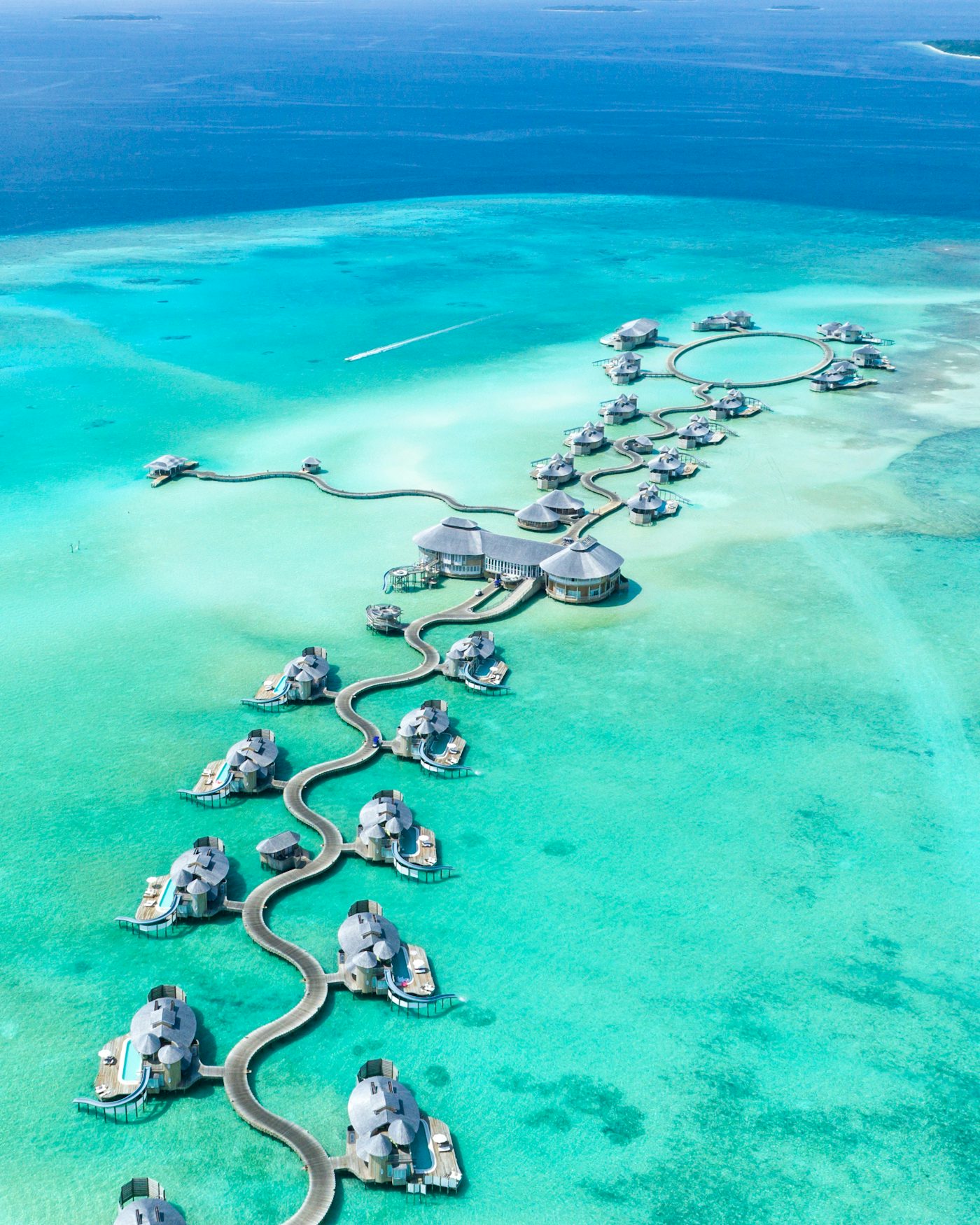
OCEAN ENCOUNTERS
Snorkelling with Manta Rays at Hanifaru Bay
Baa Atoll's UNESCO Biosphere hides the best manta gathering in the Maldives. No diving needed: just a mask, fins, and the right week. Here is how it works, when to go, and what it costs.
Why Hanifaru Bay is the best place to see mantas
Hanifaru sits inside the Baa Atoll UNESCO Biosphere Reserve. During the southwest monsoon, from May to November, currents funnel plankton into this small, dead-end bay. That concentrated food draws reef manta rays (and, on some days, whale sharks) to feed in a swirling, cyclone-like formation. It is one of the largest known gatherings of manta rays on earth, and because the bay is shallow and protected, you experience it by snorkelling right above the action rather than diving below it.
How a Hanifaru manta excursion works
Step by step, from boat to bay to mantas.
1. Boat to the bay
10 to 30 min by boatYou leave from Dharavandhoo (or your resort) by dhoni or speedboat. The guide watches the water and radio for manta activity, then times your arrival to the feeding.
2. Ranger check-in and briefing
A few minutesAt the bay, rangers check permits and brief every group on the rules. Entry is managed in windows so the bay is never overcrowded. Fins and mask on before you enter.
3. Snorkel above the mantas
Up to ~45 min in the waterYou slip in calmly and float at the surface while the mantas feed below and around you. On a good day, a swirling column of rays passes right beneath you. No diving, no touching, no chasing.
4. The ranger closes the session
Total trip: 2 to 3 hoursWhen the window ends or the mantas move on, the ranger signals the bay closed and you head back. Some trips combine the bay with a nearby reef or a sandbank stop.
When is manta season?
The season tracks the plankton, which tracks the monsoon.
Peak: June/July to October
- Southwest monsoon drives plankton into the bay
- Largest aggregations are most likely
- Best days often fall around the full and new moon
- Busiest: book excursions and stays ahead
Shoulder & off-season
- May and November: season building or winding down
- December to April: fewer mantas at Hanifaru itself
- Quieter bay, but sightings less predictable
- We check current activity before confirming dates
Where to base yourself for Hanifaru
Local island, resort, or the best of both.
| Base | Access | Cost | Excursions |
|---|---|---|---|
| Dharavandhoo (local island)CLOSEST | Closest inhabited island; short boat to the bay | Rooms from ~$100/night | Daily excursions in season |
| Baa Atoll resorts | Own excursion boats to the bay in season | From mid-range to ultra-luxury | Resort-run trips in season |
| Resort + local-island twin-stay | A few nights resort + a couple on Dharavandhoo | From ~$3,508 per couple (example) | Best of both |
Dharavandhoo (local island)
The most affordable and direct way to reach Hanifaru. Our favourite Dharavandhoo partners: Dimora Blu (design-led boutique), Kiha Beach, Island Ufaa and Biosphere Inn.
Baa Atoll resorts
Overwater villas, spa and full service with the bay on your doorstep. We combine your trip with Soneva Fushi, Four Seasons Landaa Giraavaru, Anantara Kihavah, Milaidhoo, The Nautilus, Vakkaru, Amilla, Dusit Thani, The Westin Miriandhoo, Finolhu or Avani+ Fares.
Resort + local-island twin-stay
Our most-loved way to do Baa Atoll: resort comfort plus the easiest manta access. Works with any Baa Atoll resort we partner with, built around your budget and dates.
See our done-for-you Baa Atoll twin-stay, or ask us to pair Dharavandhoo with any resort in the atoll.
Want to swim with manta rays?
Tell us your dates and we will check the season, arrange the flights, your stay and the guided Hanifaru excursion, as one honestly-priced plan.
The rules at Hanifaru Bay
It is a protected marine reserve, these rules are what keep it worth visiting. A good operator handles all of them for you.
Snorkelling only: no diving
The bay is shallow and protected; diving is banned to keep the mantas feeding naturally.
Always with a qualified guide
Every visit must be led by a Biosphere-qualified guide who manages the group and the rules.
Keep your distance: no touching or chasing
Contact damages a manta's protective coating and chasing ends the encounter for everyone.
About 45 minutes in the water
Sessions are time-limited so the site is shared fairly and the animals are not disturbed.
Daily visitor cap (~80 people, few boats)
Rangers limit numbers each day to protect the feeding behaviour. Book ahead in peak season.
No flash photography
Flashes startle the mantas. Use natural light or a GoPro without flash.
What it costs
Manta-snorkel excursion: ~$60 per person, all-in
From Dharavandhoo, the closest island. The conservation permit is included in this price.
Domestic flights: ~$200 return per person
Malé to Dharavandhoo, about 31 minutes. Fares move with dates, ask us for the lowest with your package.
Accommodation: from ~$100/night (local island) to resort rates
A resort + Dharavandhoo twin-stay starts from ~$3,508 per couple for five nights, taxes included; your total scales with the resort you choose.
Realistic expectations
What to expect vs. what the highlight reels suggest.
It is wild nature: no day is guaranteed
Some days bring a hundred mantas; some bring none. Time your trip to the peak months and a moon phase, and stay several nights, to load the odds.
Plankton means green water
The mantas come for plankton, and plankton reduces visibility. Expect softer, greener water than the clear-blue reefs, not a swimming-pool view.
Stay a few days, not one
A single attempt can miss. Several nights in peak season, with more than one trip, is how people reliably get the big encounter.
Whale sharks are a bonus
They visit the same plankton and sometimes appear at Hanifaru: a wonderful surprise, but the mantas are the reliable draw.
More Marine Life Guides
Hanifaru Bay Manta-Season Guide
Our full guide: when to go, real costs, and where to stay.
Read moreWhale Shark Snorkeling
Snorkel with the biggest fish in the ocean in South Ari.
Read moreMonthly Marine Life Calendar
Every species mapped by month and atoll.
Read moreDharavandhoo: the manta island
The local island at the doorstep of Hanifaru Bay.
Read moreReady to Snorkel with Manta Rays?
Step 1 of 5
When
Prefer to message us? WhatsApp +960 771 9666 and usually reply within the hour.