Hanifaru Bay Manta Season: How and When to Swim With Manta Rays in the Maldives
By IM Maldives·Updated 30 Aug 2026·9 min read
Hanifaru Bay, in the Maldives' Baa Atoll, is the best place in the country (arguably the world) to snorkel with manta rays. In the right season, dozens and sometimes more than a hundred mantas gather in one small bay to feed. This is an honest, first-hand guide to when to go, how it actually works, what it costs, where to base yourself, and how to give yourself the best chance of the encounter you came for.
Quick answer
- When: manta season runs May to November, with the best odds from June/July to October. Sightings peak around the full and new moon, when stronger tidal currents pull plankton into the bay.
- How: snorkelling only, scuba diving is not allowed inside Hanifaru Bay. Every visit is guided, time-limited (about 45 minutes in the water), and capped at roughly 80 people per day.
- Where from: the closest inhabited island is Dharavandhoo, about a 31-minute domestic flight from Malé, then a short boat ride to the bay.
- Cost: a guided manta-snorkel excursion from Dharavandhoo is around $60 per person, all-in (conservation permit included).
Meet the reef manta ray
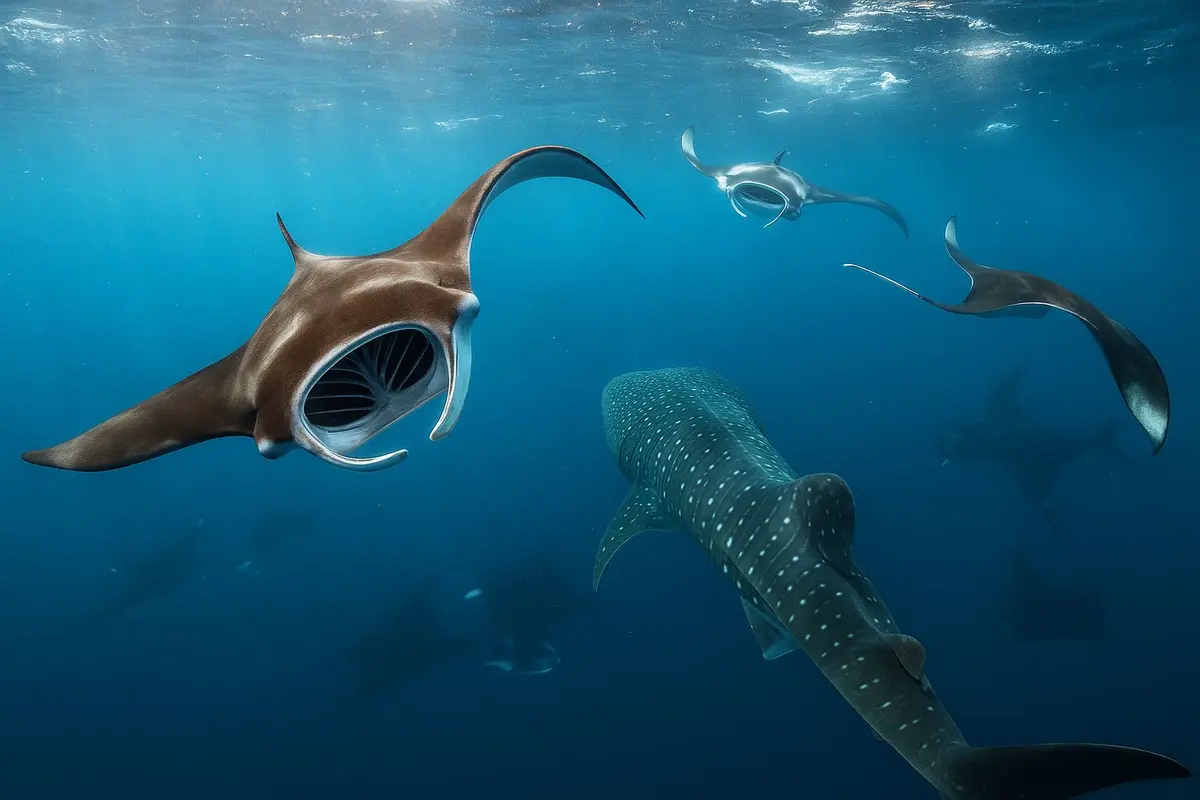
The animals you come to see are reef manta rays: gentle, plankton-eating giants with a wingspan that commonly reaches three to four and a half metres. They have no sting and no teeth to fear; they filter tiny plankton from the water through their gills, cruising with an unhurried, almost hypnotic wing-beat. Individually they are curious and calm, and each one carries a unique pattern of spots on its belly that researchers use to tell them apart. When food is concentrated, mantas gather, and nowhere in the Maldives concentrates food like Hanifaru Bay.
Why Hanifaru Bay is so special
Hanifaru sits inside the Baa Atoll UNESCO Biosphere Reserve. Its shape is the secret: it is a small, dead-end cul-de-sac of a bay. During the southwest monsoon, from May to November, incoming currents push plankton-rich water into Hanifaru, where the geography traps it and concentrates it into a thick soup. That dense food draws reef mantas, and, on some days, whale sharks: to feed in a swirling, cyclone-like formation the guides call a feeding frenzy, where rays somersault over one another in a slow-motion chain. It is one of the largest known gatherings of manta rays on earth, with counts of up to 200 animals on the biggest days. And because the bay is shallow and protected, you experience it by snorkelling right above the action rather than diving below it.
When is manta season at Hanifaru Bay?
The season tracks the plankton, which tracks the monsoon and the moon:
- May to November: the manta season overall, driven by the southwest monsoon.
- June/July to October: the peak, when the biggest aggregations are most likely.
- Around the full and new moon: the strongest (spring) tides, which pull the most plankton into the bay. These are often the best days of any given week.
Because it is wild nature, no single day is guaranteed. The practical way to load the odds in your favour is to stay four to seven nights during the peak months and plan around a moon phase. That gives your guides several attempts across changing tides. Before you book, we check the recent activity in the bay so your dates land on the best realistic chance.
Hanifaru vs. mantas elsewhere in the Maldives
You can encounter manta rays in several Maldivian atolls year-round, usually at cleaning stations, reef spots where mantas hover to be groomed by small fish. Those encounters are lovely, but they are typically one or a few animals at a time. Hanifaru is different: it is a feeding aggregation, seasonal and spectacular, where many mantas gather at once. If you want the bucket-list scene of a sky full of rays, Hanifaru in season is the place; if you simply want to see a manta on a calm reef, many resorts can offer that outside the Hanifaru window.
The rules, so you know what to expect
Hanifaru is a protected marine area, and the rules are exactly what keep it worth visiting:
- Snorkelling only. No scuba diving inside the bay, it keeps the shallow water calm and the mantas feeding naturally.
- Guided access. Every visit must be with a Biosphere-qualified guide who manages the group and the rules.
- Time-limited. Roughly 45 minutes in the water per session, managed in windows so the bay is never overcrowded.
- Daily cap. Around 80 visitors and a handful of boats per day, enforced by rangers on site.
- No touching, chasing or blocking the mantas, and no flash photography.
A conservation permit funds the reserve. On a proper excursion this is arranged for you: with our Dharavandhoo trips it is already included in the $60 per-person price, so there is nothing to organise on the day.
How to get to Hanifaru Bay
Getting there is simpler than most people expect:
- Domestic flight: Malé (Velana International) to Dharavandhoo takes about 31 minutes. Return fares are roughly $110 one way / $200 return per person, and vary by date.
- Short boat transfer from Dharavandhoo out to Hanifaru Bay, often just a few minutes.
Domestic flight prices move a lot with dates and demand, ask us for the lowest flight fares as part of your package, as we book these alongside your stay.
Where to stay: local island, resort, or both
On the local island, Dharavandhoo (closest and best value)
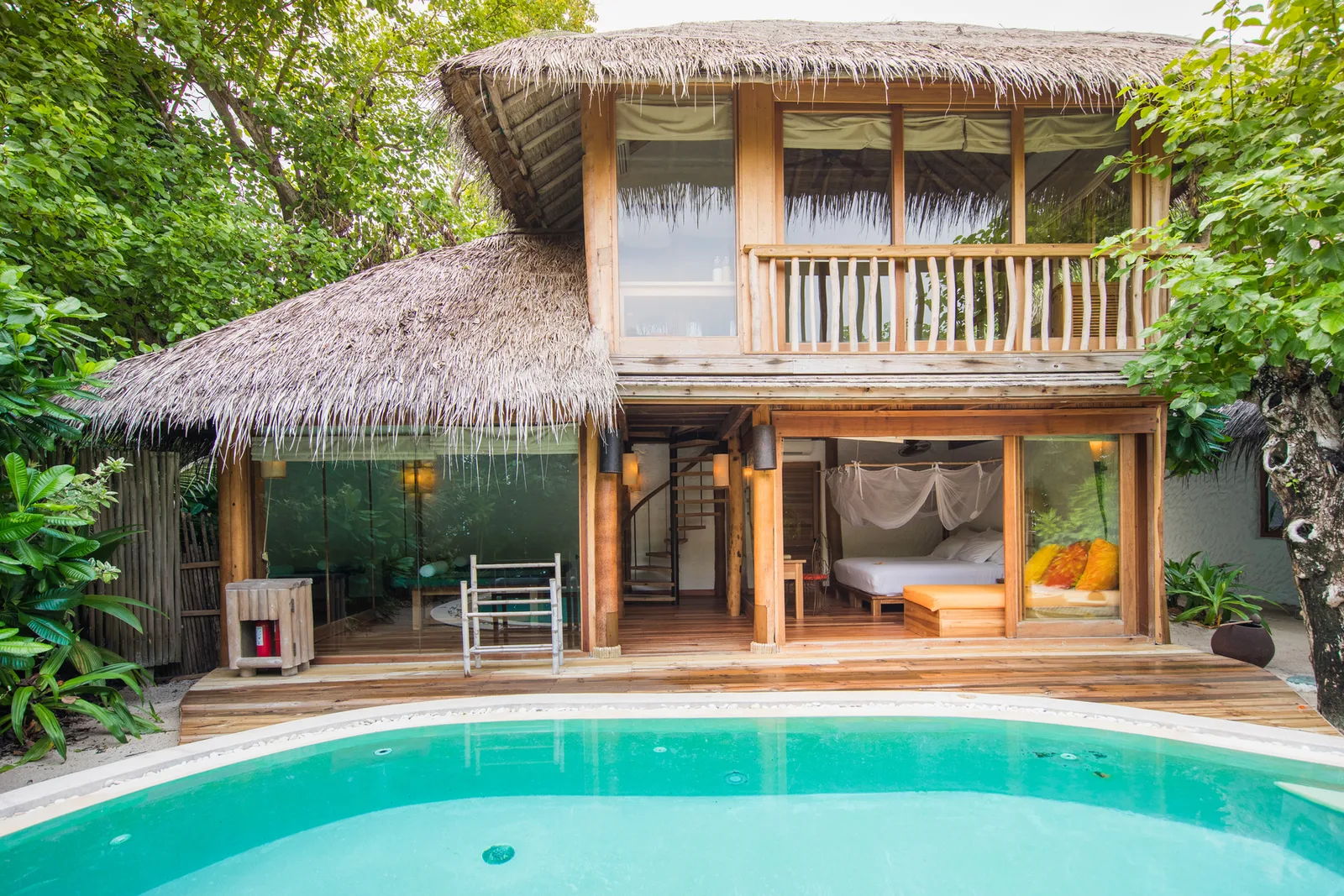
Staying on Dharavandhoo puts you minutes from the bay and costs a fraction of a resort. Rooms typically run from around $100 a night, rising in peak season. It is also the most authentic side of the trip: a real inhabited island with its own beaches, cafés and rhythm. Our favourite Dharavandhoo partners are Dimora Blu (our pick for design-led boutique), Kiha Beach, Island Ufaa, and Biosphere Inn.
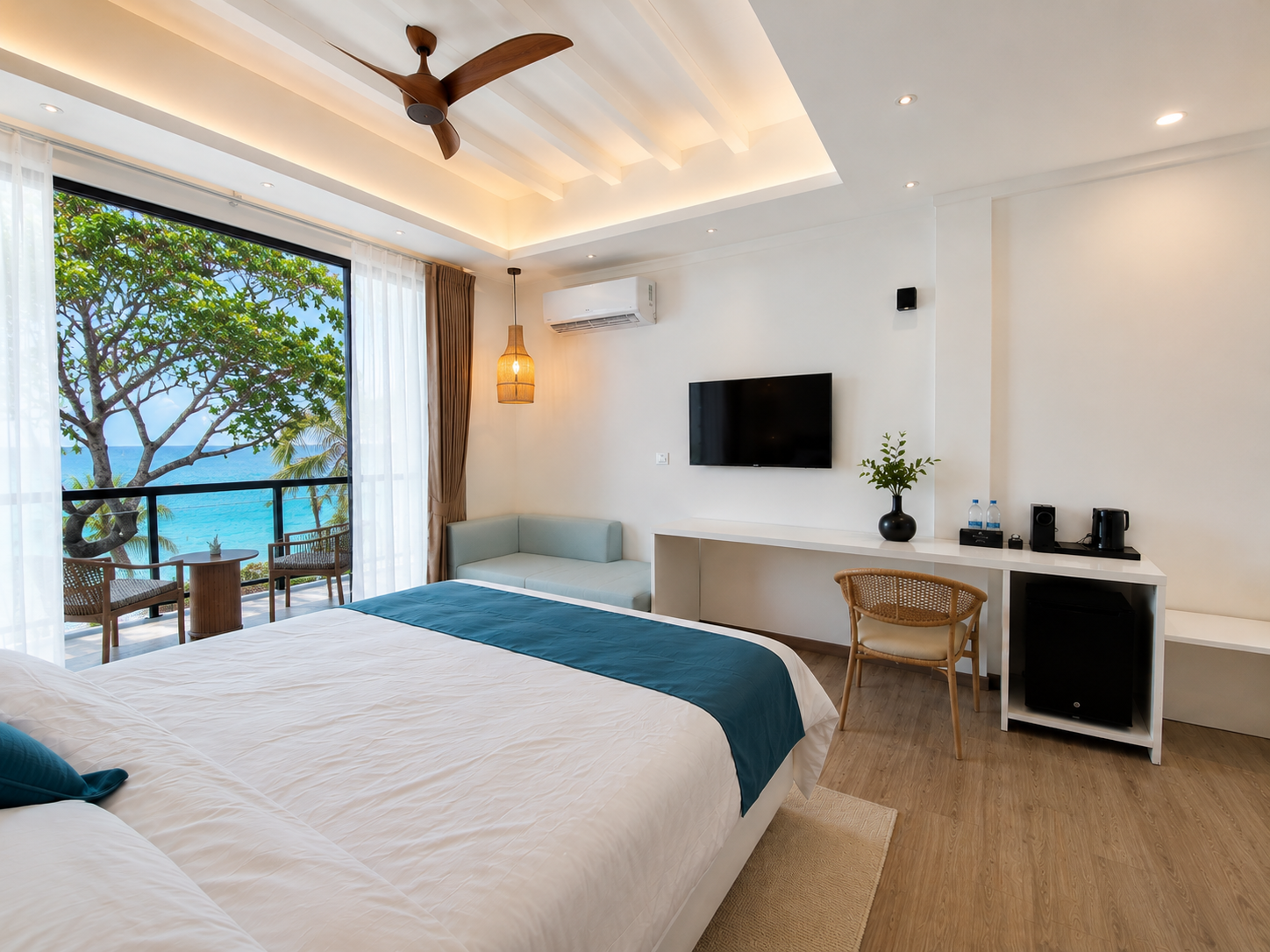
Dimora Blu describes itself simply as "a boutique guesthouse on Dharavandhoo, Baa Atoll": an intimate beach house rather than a big hotel, about twenty minutes' flight from Malé. Its rooms run from the Beach View Deluxe, set right on the sand with a walk-in rain shower and a terrace over the water, down to garden-side Deluxe and Standard rooms. Meals are served at its beachside restaurant, barefoot with sand underfoot, and there is a small wellness spa, Mélo, for massages and ocean rituals. Its signature draw is the one that matters here: Hanifaru Bay is only ten minutes away by speedboat. For travellers who want something more refined than a standard guesthouse but still love the local-island feel, it is our top recommendation on Dharavandhoo.
At a resort, the Baa Atoll collection
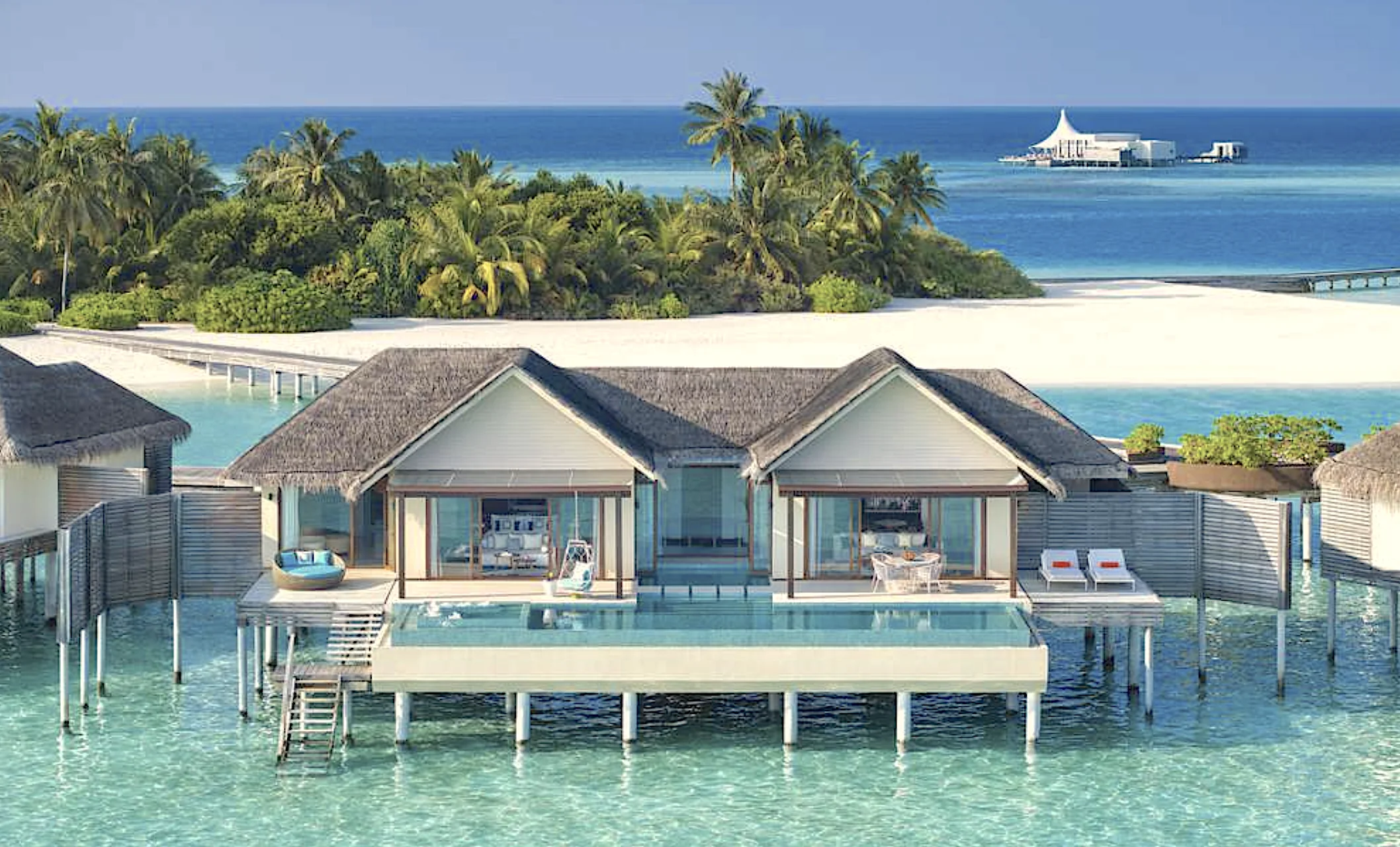
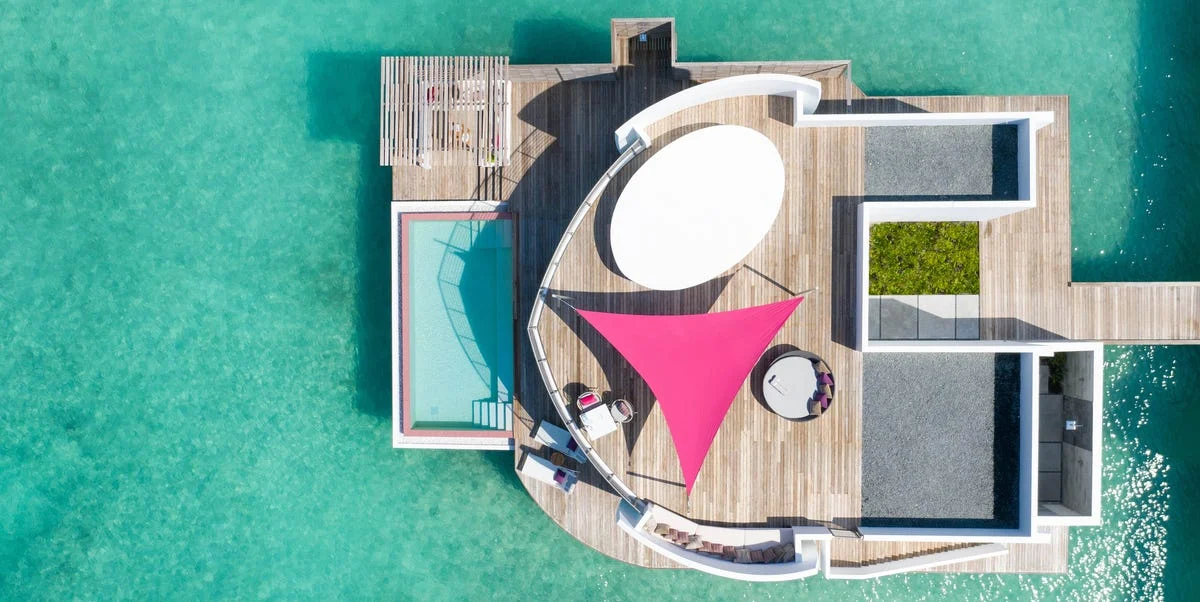
If you want overwater villas, spa and full resort service with the bay on your doorstep, Baa Atoll has one of the strongest resort line-ups in the Maldives, and every one of them runs manta excursions in season. Depending on your style and budget, we combine your trip with resorts such as Soneva Fushi, Four Seasons Landaa Giraavaru, Anantara Kihavah, Milaidhoo, The Nautilus, Vakkaru, Amilla, Dusit Thani, The Westin Miriandhoo, Finolhu or Avani+ Fares. As Maldives specialists we hold rates across the atoll, so we match the resort to you rather than to a single fixed offer.
Best of both, a Baa Atoll twin-stay
Our most-loved way to do Baa Atoll combines the two: a few nights at a resort for comfort and overwater villas, plus a couple of nights on Dharavandhoo for the local island and the easiest manta access. This works with any Baa Atoll resort we partner with, we build it around your budget and dates. One ready-made example is our Finolhu + Dharavandhoo twin-stay, but the same idea pairs Dharavandhoo with Soneva Fushi, Vakkaru, Dusit Thani or any resort in the atoll.
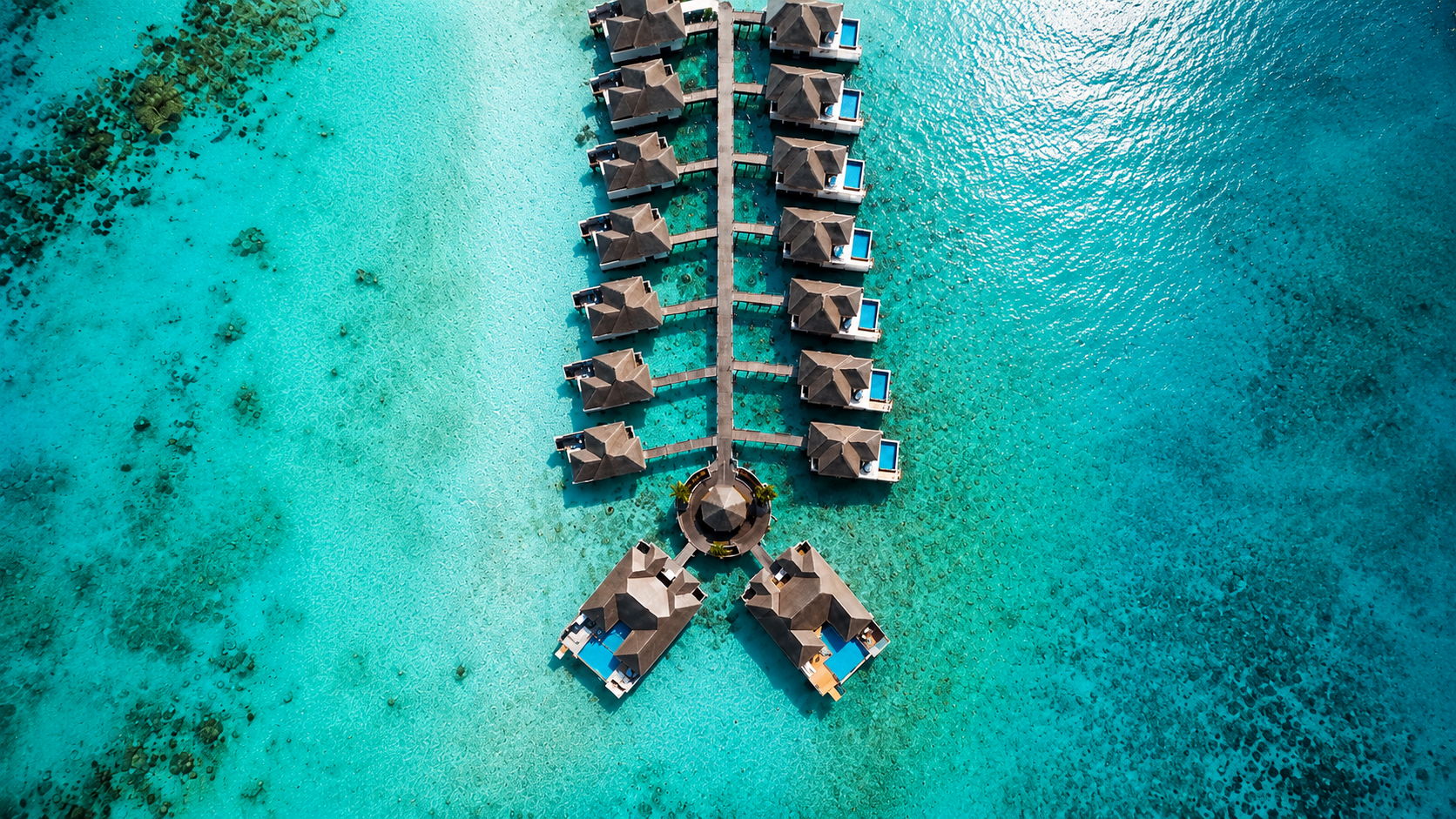
Finolhu Maldives, a Seaside Collection Resort • 5 NIGHTS · 6 DAYS
Baa Atoll Luxury Twin-Stay: Finolhu + Dharavandhoo
A rare Baa Atoll twin-stay combining three nights at Finolhu Maldives with two nights on Dharavandhoo, the local island gateway to Hanifaru Bay. Designed for travellers who want a luxury resort stay, manta-season access, and a more authentic side of the Maldives in one seamless trip.
From $3,508 was $4,212
What it costs
- Manta-snorkel excursion: around $60 per person, all-in from Dharavandhoo (permit included).
- Domestic flights: roughly $200 return per person (ask us for the best fare with your package).
- Local-island stay: from around $100 a night; a resort stay costs considerably more.
- A resort + Dharavandhoo twin-stay: our Finolhu example starts from $3,508 per couple for five nights, with breakfast, flights, transfers and a guided manta excursion, Maldives taxes included. Your total scales with the resort you choose, from value to ultra-luxury.
Photographing the mantas
You do not need a professional rig, most people come home thrilled with a GoPro. A few things help:
- Go wide. Mantas are big and close; a wide-angle lens or the widest GoPro setting captures the whole animal.
- No flash. It is against the rules and it startles the mantas, rely on natural light.
- Expect softer water. The plankton that draws the mantas also greens the water, so images look moodier than a clear-reef photo. That is normal, not a failed trip.
- Shoot up. Framing the manta against the brighter surface gives the cleanest silhouettes.
- Charge everything. There is no recharging on the boat, and you will not want to run out mid-frenzy.
What to pack for the excursion
- Your own mask and snorkel, a comfortable fit makes 45 busy minutes far better than a rental.
- Short fins (long freedive fins get in others' way in a crowded bay).
- A rash guard for sun protection and reef-safe sunscreen applied before you board.
- Seasickness tablets if you are prone, taken about an hour before.
- A dry bag for phone and valuables, and water for the boat.
Doing it responsibly
Hanifaru is protected for a reason, and the rules are what keep it magical. Keeping your distance, never touching, and following your guide are not red tape, they are why the mantas keep returning to feed here in numbers you can see from the surface. The conservation permit you pay funds the reserve and its rangers. Choosing a reputable operator, staying calm in the water, and respecting the daily limits are the difference between a site that thrives and one that empties out. We only work with guides who take this seriously.
Plan your manta trip with IM
We are Maldives specialists based in Malé, and Baa Atoll is our backyard. We arrange the flights, the stay: local island, resort or both: the guided manta excursion, and a sandbank trip if you want one, in a single, honestly-priced plan. Tell us your dates and we will check the season and build it around you.
See the Baa Atoll twin-stay package or send us your dates for a tailored quote. You might also like our Hanifaru manta-snorkelling experience page, and our island guides to Dharavandhoo and neighbouring Fehendhoo.
See the mantas of Hanifaru Bay
Tell us your dates and we will check the season and build your Baa Atoll trip: resort, local island, or both.
Plan my manta tripFrequently asked questions
When is the best time to see manta rays at Hanifaru Bay?
How many mantas will I see?
Can you scuba dive at Hanifaru Bay?
Are manta rays dangerous?
How much does a Hanifaru Bay manta trip cost?
Do I need a permit for Hanifaru Bay?
Do I need to be a strong swimmer?
How do I get to Hanifaru Bay?
Are manta sightings guaranteed?
Advertisement
Planning a trip to the Maldives? Explore our curated travel packages, browse handpicked resorts, or learn about our destination wedding and group buyout services. Have questions? Check our FAQs or send us an enquiry, our curators are on the ground and ready to help.